
Softbank is one of the most aggressive and controversial investors in American technology. With its massive Vision Funds, the Japanese conglomerate has poured billions into US startups, reshaping entire industries from ride-hailing to co-working and food delivery. Understanding Softbank’s biggest US investments gives you a clear window into where the smart money is flowing — and what it means for the future of innovation.
But building a successful life isn’t just about watching others invest. It’s about investing in yourself. That’s why we’ll also cover the fuel that powers your best performance: top-rated protein powders you can buy right now. First, let’s break down Softbank’s boldest bets on American soil.
Table of Contents
The Vision Fund: Softbank’s American Power Play
Softbank launched its first Vision Fund in 2017 with nearly $100 billion in capital. The goal: identify and back the next generation of tech giants. The US market became the primary focus, attracting the largest share of Vision Fund dollars. CEO Masayoshi Son’s strategy was simple — go big or go home.
Key characteristics of the Vision Fund’s US approach:
- Bet on market leaders with global ambitions
- Inject massive capital to accelerate growth, often at the expense of profitability
- Take large equity stakes, sometimes with board seats
- Push portfolio companies toward aggressive expansion
The results have been a mixed bag. Some investments, like DoorDash and Uber, went public and delivered strong returns. Others, most famously WeWork, turned into cautionary tales of overvaluation and poor governance.
Softbank’s Biggest US Investments: A Breakdown
1. Uber Technologies (Ride-Hailing & Mobility)
Softbank first invested in Uber in 2018, acquiring a 15% stake for about $8 billion. At the time, Uber was locked in a global battle with Didi Chuxing and Lyft. Softbank’s money and influence helped Uber go public in 2019.
| Investment Aspect | Details |
|---|---|
| Initial Investment | ~$8 billion for 15% stake (2018) |
| Current Status | Public company (NYSE: UBER) |
| Estimated Return | Mixed — stock fluctuated, but Softbank has partially cashed out profitably |
| Key Lesson | Softbank’s backing gave Uber runway to dominate — but profitability took years |
Uber remains one of Softbank’s most visible US holdings. The company has since expanded into food delivery (Uber Eats), freight, and autonomous vehicles. For Softbank, it’s a play on the future of transportation and logistics.
2. WeWork (Co-Working & Real Estate)
This is the investment everyone remembers. Softbank poured over $16 billion into WeWork, making it the company’s biggest single bet. The 2019 IPO collapse exposed massive governance problems and inflated valuation.
Why Softbank doubled down despite red flags:
- Believed WeWork was a tech company disrupting real estate
- Saw potential for a global community platform
- Misjudged the founder’s leadership and financial controls
After a painful restructuring and a pandemic that decimated office demand, WeWork filed for bankruptcy in 2023. Softbank wrote off nearly the entire investment. It’s a stark reminder that even the smartest money can make catastrophic mistakes.
3. DoorDash (Food Delivery)
When Softbank led a $535 million investment in DoorDash in 2019, delivery wasn’t yet a necessity. The pandemic turned it into one. DoorDash went public in 2020, and Softbank’s stake soared.
Why DoorDash succeeded where other Softbank bets faltered:
- Strong unit economics and focus on suburban markets
- Timely IPO during a delivery boom
- Efficient expansion into adjacent services (convenience, grocery)
Softbank reported billions in gains from its DoorDash position. The investment validated the firm’s thesis: back the dominant player in a growing category, even if it’s losing money early on.
4. Arm Holdings (Semiconductor Design)
Though Arm is headquartered in the UK, its US listing and deep ties to American chip makers make it a crucial part of Softbank’s US portfolio. Softbank acquired Arm in 2016 for $32 billion, then took it public on Nasdaq in 2023.
Arm’s chip designs power nearly every smartphone in the world. The IPO was a major win for Softbank, raising $4.9 billion and valuing the company at over $50 billion. As AI demand skyrockets, Arm’s energy-efficient architecture becomes even more critical.
5. Slack Technologies (Enterprise Communication)
Softbank invested $3.5 billion in Slack through its Vision Fund in 2017. At the time, Slack was the hot new workplace tool challenging email. The investment paid off when Salesforce acquired Slack in 2021 for $27.7 billion.
Key takeaway: Softbank’s bet on enterprise collaboration was ahead of the curve. The remote work trend accelerated Slack’s value, making this one of the fund’s most successful exits.
6. Other Notable US Investments
- Nvidia – Softbank bought a $4 billion stake in 2017 and sold it years later, missing out on massive AI-driven gains.
- WeWork competitor Knotel – Another co-working bet that failed.
- OneWeb – Satellite internet startup that Softbank backed heavily; filed for bankruptcy before being rescued by the UK government.
- Roivant Sciences – Biotech holding company; Softbank invested $1.1 billion.
The Impact of Softbank’s US Portfolio on Startup Funding
Softbank’s presence fundamentally changed how startups raise money. By writing $100 million+ checks, it forced other venture firms to either follow suit or get left behind. The Impact of Softbank's Us Portfolio on Startup Funding is still being felt today.
Three major changes Softbank introduced:
- “Blitzscaling” became the norm – Softbank encouraged founders to spend aggressively on growth, regardless of profitability.
- Valuations inflated across the board – Competitors had to match Softbank’s terms or risk losing the best deals.
- More exits via direct listings or SPACs – Softbank pushed portfolio companies to go public faster.
Critics argue this approach created a bubble. Supporters say it accelerated innovation. Either way, Softbank reshaped the US venture landscape permanently.
How Softbank’s Investment Strategy Is Shaping the US Tech Landscape
Softbank’s strategy is not just about picking winners. It’s about creating entire ecosystems. By investing in companies like Uber, DoorDash, and Arm, Softbank builds synergies between its portfolio firms. For example, DoorDash uses Uber-style logistics; Arm chips power the devices that run these apps.
To understand the broader picture, read How Softbank's Investment Strategy Is Shaping the Us Tech Landscape?.
Current focus areas for Softbank in the US:
- Artificial intelligence and machine learning
- Autonomous vehicles
- Cloud infrastructure
- Healthcare technology
- Enterprise software
The Personal Success Parallel: Invest in Your Own Growth
Softbank’s massive bets teach us something important: real success requires bold, well-informed investments. That applies not just to finance, but to your health and performance. You can’t build a successful life on an empty tank.
What fuels your best work?
- Consistent sleep and stress management
- Strength training and cardiovascular health
- High-quality nutrition — especially adequate protein intake
Protein powder is a convenient, efficient way to meet your daily protein goals, supporting muscle repair, immune function, and sustained energy. Whether you’re an entrepreneur pulling long hours or a busy professional juggling demands, the right protein supplement can keep you performing at your peak.
Top Protein Powders to Support Your Success Journey
The following products are among the highest-rated on Amazon. Each offers a unique benefit. Choose the one that fits your lifestyle and goals.
Optimum Nutrition Gold Standard Whey Protein

Price: $44.99 | Rating: 4.6
The gold standard of whey protein. This double rich chocolate flavor mixes easily and delivers 24g of protein per scoop. Ideal for post-workout recovery or a quick meal replacement.

Price: $79.99 | Rating: 4.7
The 5-pound bulk option. Vanilla ice cream flavor with 24g protein per serving. Great value for regular users.
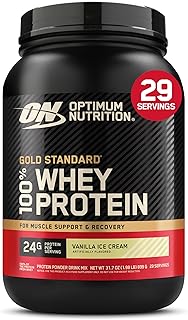
Price: $44.99 | Rating: 4.7
Same high-quality formula in a smaller 2-pound tub. Perfect for travel or first-time buyers.
Premier Protein Powder

Price: $25.97 | Rating: 4.6
30g protein with only 1g sugar. Chocolate milkshake flavor. Keto-friendly and gluten-free. Great for anyone watching their sugar intake.

Price: $31.60 | Rating: 4.6
Same formula in vanilla. Also 30g protein per serving, low sugar, and easy to digest.
Orgain Organic Vegan Protein Powder

Price: $31.52 | Rating: 4.5
Plant-based with 21g protein and 6g prebiotic fiber. No added sugar. Perfect for vegans or those with lactose sensitivity.
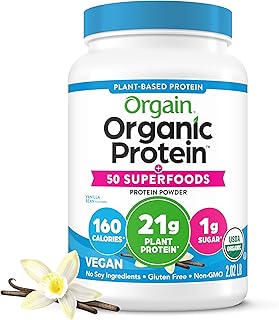
Price: $34.15 | Rating: 4.6
Same 21g protein plus 50 superfoods and 8g fiber. An all-in-one nutritional boost.

Price: $26.99 | Rating: 4.3
Unflavored and unsweetened. Mix into anything without altering taste. Pure, clean protein.
Dymatize ISO 100 Whey Protein Isolate

Price: $108.99 | Rating: 4.7
Hydrolyzed 100% whey isolate. 25g protein per serving, zero fat, zero sugar. Ultra-fast absorption for serious athletes.

Price: $76.18 | Rating: 4.6
High-quality whey with 25g protein, 5.5g BCAAs. A more affordable option from the same trusted brand.

Price: $42.48 | Rating: 4.6
Fun Fruity Pebbles flavor. Same 25g hydrolyzed isolate. Great taste with no added sugar.

Price: $39.98 | Rating: 4.5
For hard gainers: 52g protein, 1g creatine, 1280 calories per serving. Massive muscle-building support.
Transparent Labs Grass-Fed Whey Protein Isolate

Price: $59.99 | Rating: 4.5
Grass-fed whey isolate. 28g protein per serving, no artificial additives. Clean label, transparent sourcing.
Body Fortress Super Advanced Whey Protein Powder

Price: $45.28 | Rating: 4.6
Affordable whey protein with added vitamins C, D, and zinc for immune support. 3.9-pound tub.
Six Star Whey Protein Powder

Price: $24.97 | Rating: 4.5
Budget-friendly with 30g protein per serving. Includes whey isolate and peptides for fast absorption.
Isopure Zero Carb 100% Pure Whey Isolate

Price: $89.95 | Rating: 4.4
Zero carbs, zero fat. 25g protein per serving. Unflavored — mix into water, milk, or smoothies seamlessly.
Levels Grass Fed Whey Protein Powder

Price: $44.99 | Rating: 4.5
Grass-fed, no artificial ingredients. 24g protein per serving. Undenatured whey for maximum benefits.
Vital Proteins Collagen Peptides Powder

Price: $18.65 | Rating: 4.6
Collagen peptides for skin, hair, nails, and joints. Unflavored, dissolves in hot or cold liquids.
NAKED Whey Vanilla Protein Powder

Price: $44.99 | Rating: 4.1
Minimalist formula: grass-fed whey, vanilla, and organic coconut sugar. No artificial anything.
Nutricost Whey Protein Concentrate (Chocolate) 5LBS

Price: $74.95 | Rating: 4.5
Great value in a 5-pound tub. 25g protein per serving. Simple, effective, and affordable.
Frequently Asked Questions About Softbank’s US Investments
What is Softbank's largest US investment?
Softbank's largest US investment to date is WeWork, where the firm deployed over $16 billion. That bet ultimately ended in bankruptcy, making it the biggest single loss in venture capital history.
How much money has Softbank invested in US startups?
As of 2024, Softbank has invested roughly $100 billion in US technology companies through its Vision Funds and other vehicles. The total includes both equity stakes and debt financing.
Which Softbank US investments have been most profitable?
DoorDash, Arm Holdings (via its IPO), and Slack (acquired by Salesforce) rank among the most profitable. Uber also generated significant gains when Softbank sold portions of its stake.
Did Softbank invest in Nvidia?
Yes. Softbank bought a $4 billion stake in Nvidia in 2017. The fund sold its position in 2019, missing out on the AI-driven surge that would later multiply Nvidia’s market cap by more than 10x.
Why did Softbank invest so heavily in WeWork?
Masayoshi Son believed WeWork was a technology platform that would revolutionize commercial real estate. He projected explosive growth, but governance failures and the pandemic destroyed the company’s value.
Is Softbank still investing in the US?
Yes. Softbank continues to invest in US companies through its Vision Fund 2 and Latin America Fund. Recent deals include AI startups, autonomous vehicle companies, and healthcare technology firms.
How does Softbank's investment strategy affect the broader startup ecosystem?
Softbank’s massive checks and willingness to fund unprofitable growth forced other VCs to compete aggressively. This shaped an era of “blitzscaling” and inflated valuations. The long-term effects are still unfolding.
What is the success rate of Softbank's US investments?
It's mixed. While high-profile wins like DoorDash and Arm delivered strong returns, failures like WeWork, OneWeb, and several other portfolio companies resulted in billions in losses. Overall, the Vision Fund has underperformed its initial targets.